info@cietcbe.edu.in +91 422-2970703

Mechatronics Engineering

Home >Academics >Mechatronics Engineering

MECHATRONICS ENGINEERING

Students prefer Mechatronics Engineering because it offers an interdisciplinary approach, combining mechanical, electrical, and computer engineering. It provides hands-on learning with cutting-edge technologies like robotics and automation, aligning with growing industry demand. The field offers diverse career opportunities across industries such as manufacturing and aerospace. Its focus on innovation and problem-solving attracts students interested in developing smart systems.

ABOUT THE DEPARTMENT

The Department of Mechatronics Engineering at Coimbatore Institute of Engineering and Technology (CIET) was established in 2012 with a vision of developing industry-ready engineers with interdisciplinary expertise in mechanical systems, electronics, electrical systems, control, computing, robotics and automation. The department offers a four-year B.E. programme in Mechatronics Engineering, integrating multidisciplinary engineering knowledge with emerging technologies.

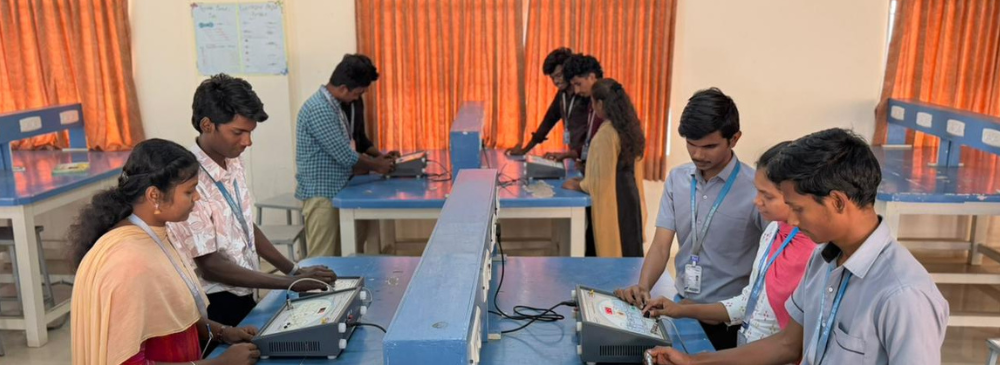
The department drives hands-on learning, innovation and industry readiness through well-equipped laboratories, practical training, projects, internships and real-world applications. Students develop technical expertise, problem-solving, creativity, teamwork and professional skills. Research focuses on Robotics, Automation, AI, Industrial IoT, Embedded Systems, Machine Vision and Smart Manufacturing. Strong industry partnerships and expert interaction provide exposure to emerging technologies and industry-driven projects.

With a focus on technical excellence, innovation, entrepreneurship, professional ethics, and sustainable engineering, the department prepares graduates for careers in robotics, automation, manufacturing, automotive systems, embedded technology, industrial control, and Industry 4.0. It empowers them to drive intelligent and sustainable engineering solutions while nurturing innovative, competent, and socially responsible engineers for a better tomorrow.

Programme Offered

B.E. Mechatronics Engineering

Vision

To achieve academic excellence and transform knowledge into innovative mechatronics products and solutions for the benefit of society.

Mission

M1 To impart quality education by synergistic and interdisciplinary integration of engineering concepts.

M2 To provide opportunities for creative thinking and hands-on problem-solving skills by providing state of the art laboratories.

M3 To inculcate entrepreneurial skills for innovative product development through mechatronics system design.

Programme Educational Objectives (PEOs)

The Programme Educational Objectives describe what graduates are expected to achieve after completing the programme.

PEO1 - Graduates will apply multidisciplinary engineering knowledge to develop innovative and sustainable mechatronics solutions and contribute to the technological development of Digital India.

PEO2 - Graduates will pursue lifelong learning and adapt to emerging technologies to address engineering and societal challenges ethically and effectively.

PEO3 - Graduates will demonstrate professional skills, teamwork, leadership and entrepreneurial abilities while contributing effectively to industry and society.

Program Outcomes (POs)

Engineering Graduates will be able to:

Engineering Knowledge: Apply knowledge of mathematics, natural science, computing, engineering fundamentals and an engineering specialization as specified in WK1 to WK4 respectively to develop to the solution of complex engineering problems.

Problem Analysis: Identify, formulate, review research literature and analyze complex engineering problems reaching substantiated conclusions with consideration for sustainable development. (WK1 to WK4)

Design/Development of Solutions: Design creative solutions for complex engineering problems and design/develop systems/components/processes to meet identified needs with consideration for the public health and safety, whole-life cost, net zero carbon, culture, society and environment as required. (WK5)

Conduct Investigations of Complex Problems: Conduct investigations of complex engineering problems using research-based knowledge including design of experiments, modelling, analysis & interpretation of data to provide valid conclusions. (WK8)

Engineering Tool Usage: Create, select and apply appropriate techniques, resources and modern engineering & IT tools, including prediction and modelling recognizing their limitations to solve complex engineering problems. (WK2 and WK6)

The Engineer and The World: Analyze and evaluate societal and environmental aspects while solving complex engineering problems for its impact on sustainability with reference to economy, health, safety, legal framework, culture and environment. (WK1, WK5, and WK7)

Ethics: Apply ethical principles and commit to professional ethics, human values, diversity and inclusion; adhere to national & international laws. (WK9)

Individual and Collaborative Team work: Function effectively as an individual, and as a member or leader in diverse/multi-disciplinary teams.

Communication: Communicate effectively and inclusively within the engineering community and society at large, such as being able to comprehend and write effective reports and design documentation, make effective presentations considering cultural, language, and learning differences.

Project Management and Finance: Apply knowledge and understanding of engineering management principles and economic decision-making and apply these to one’s own work, as a member and leader in a team, and to manage projects and in multidisciplinary environments.

Life-Long Learning: Recognize the need for, and have the preparation and ability for
i) independent and life-long learning
ii) adaptability to new and emerging technologies and
iii) critical thinking in the broadest context of technological change. (WK8)

Knowledge and Attitude Profile (WK)

WK1: A systematic, theory-based understanding of the natural sciences applicable to the discipline and awareness of relevant social sciences.

WK2: Conceptually-based mathematics, numerical analysis, data analysis, statistics, and formal aspects of computer and information science to support detailed analysis and modelling applicable to the discipline.

WK3: A systematic, theory-based formulation of engineering fundamentals required in the engineering discipline.

WK4: Engineering specialist knowledge that provides theoretical frameworks and bodies of knowledge for the accepted practice areas in the engineering discipline; much is at the forefront of the discipline.

WK5: Knowledge, including efficient resource use, environmental impacts, whole-life cost, reuse of resources, net zero carbon, and similar concepts, that supports engineering design and operations in a practice area.

WK6: Knowledge of engineering practice (technology) in the practice areas in the engineering discipline.

WK7: Knowledge of the role of engineering in society and identified issues in engineering practice in the discipline, such as the professional responsibility of an engineer to public safety and sustainable development.

WK8: Engagement with selected knowledge in the current research literature of the discipline, awareness of the power of critical thinking and creative approaches to evaluate emerging issues.

WK9: Ethics, inclusive behaviour, and conduct. Knowledge of professional ethics, responsibilities, and norms of engineering practice. Awareness of the need for diversity by reason of ethnicity, gender, age, physical ability, etc., with mutual understanding and respect, and of inclusive attitudes.

Program Specific Outcomes (PSOs)

PSO1 - Apply principles of mechanics, electronics and computing to design and develop innovative mechatronic systems.

PSO2 - Utilize robotics, IoT and automation technologies to develop intelligent and sustainable engineering solutions for real-world problems.

PSO3 - Analyze, optimize and develop ethical and sustainable solutions to address industry and societal challenges.

Regulation

Curriculum & Syllabi